Dwarka Expressway Property Guide 2026: Sectors, Projects, Prices, Connectivity & Buyer Considerations
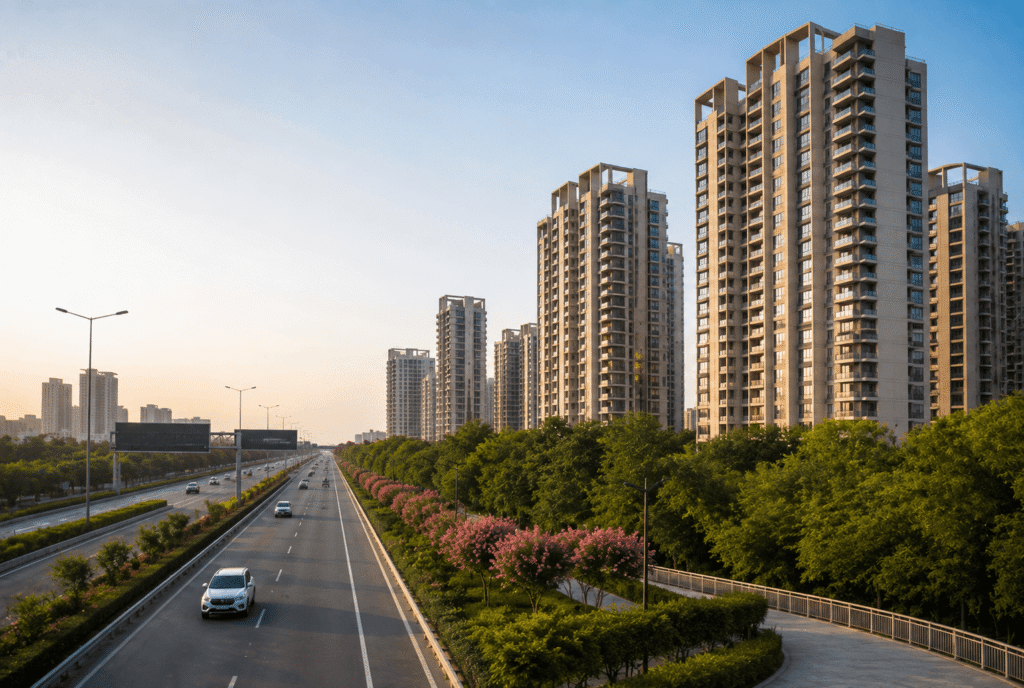
Quick Answer Dwarka Expressway is no longer just an upcoming realty corridor. The Haryana side has been running since March 2024, connectivity in Delhi has been gradually improved and the residential market around it now has occupied societies and resale stock, under construction projects and new luxury launches. The real question for buyers in 2026 is no longer whether Dwarka Expressway will become a reality, but which sector and project make sense at the price point you are considering. Most of the asking rates in the market and on portals are currently in the ₹11,000–₹18,000 per sq ft band, but the individual project rates may be materially off this mark depending on the type, and premium projects closer to the Delhi border area may shoot above ₹20,000 per sq ft in certain launches. Do not use these as transaction value guarantees. No Metro is available yet: there is a dedicated spur towards the corridor being built, and a new station will be located close to Sector 101, but no line is ready to be used now. Don’t always think of metro as an amenity; think of it as infrastructure for the future. The short version: Dwarka Expressway is worth serious consideration in 2026, but buying the corridor is not the same thing as buying the right property. Why Dwarka Expressway Property Deserves a Fresh Look in 2026 For years, the Dwarka Expressway saga has revolved around what was supposed to happen: the road was supposed to open, the airport connection was to be upgraded, metro connectivity was to be added, new sectors were to be built, large developers were to come in. Much of that expected future is now part of the present. The road has been opened, and people have moved into the residential areas; people are using the corridor daily, and new projects are being launched, and resale properties from existing projects are being offered. However, it doesn’t mean the corridor is complete, and it’s here that buyers should be careful. A successful expressway does not guarantee that all the service roads, drainage infrastructure, internal roadways, retail pockets, or social infrastructure in the immediate vicinity of a project are in place. The main carriageway and the surrounding neighbourhood can still be far apart, of course. This is why it’s not sufficient to have a brochure alone. The project can be publicized as “Dwarka Expressway” despite being located several minutes away from the road. A project can have an appealing launch price, but a significantly higher overall acquisition cost when parking charges, floor-rise, PLC, club charges, and other costs are taken into account. A “metro-connected” project could be a station that is not open today but will be opened in the future. The infrastructure story has developed; the due-diligence story hasn’t caught up. What is the Dwarka Expressway? The Dwarka Expressway, dubbed NH-248BB and Northern Peripheral Road (NPR), links the Dwarka area of Delhi with Gurugram and is an alternative route to the older, busier NH-48. The Haryana section is an 18-lane route about 19 km long, from the Delhi-Haryana border to Basai-Kherki Daula, and opened in March 2024. After that, the sections were opened one after the other on the Delhi side, such as the tunnelled section towards Dwarka and towards the airport. The overall corridor extends to approximately 29 km. The most important difference for buyers of real estate: The expressway is open, but the surrounding area is not. There is still some unevenness in supporting infrastructure facilities in some areas; service roads, drainage, and junction improvement facilities vary significantly between sectors, especially in Sectors 112–115, where service roads were still under construction and drainage work was still ongoing well into 2026. The difference is significant if one project is under the name of “Dwarka Expressway” and the other is in a completely different stage of readiness. Dwarka Expressway 2026: Key Facts at a Glance Factor 2026 position Official road designation NH-248BB Common name Dwarka Expressway / Northern Peripheral Road Approx. corridor length ~29 km Haryana carriageway Operational since March 2024 Delhi-side connectivity Progressively operational Airport connectivity Significantly improved Direct metro on the corridor Under construction — not operational as of September 2026 Core residential sectors 99, 99A, 102–104, 106, 108–109, 110A, 111–113 Indicative residential asking rates Roughly ₹11,000–₹18,000/sq ft across much of the market Premium developments Can exceed ₹20,000/sq ft in select launches Biggest buyer variable Project and developer quality Biggest due diligence issue Separating operational infrastructure from proposed infrastructure Prices, construction status, and infrastructure timelines are dynamic. The figures above are reference points based on information available around August–September 2026 and should be independently verified before you buy. Why Are Buyers Still Buying Property on Dwarka Expressway? The biggest change is simple: Dwarka Expressway is now being used, not merely discussed. Residents in sectors such as 102, 104, and 108 already use the corridor daily for travel toward Gurugram’s business districts, NH-48, Delhi, and other parts of the NCR, which puts the market on a different footing than the purely speculative phase this corridor went through in its earlier years. A few of the older residential projects are no longer sites of construction. Projects like Godrej Summit, Shapoorji Joyville and Hero Homes in Sector 104 are now established, occupied communities, where buyers can now draw their own inferences as to what a launch brochure cannot display – construction quality, maintenance standards, actual occupancy, traffic at the project gate, noise levels, parking, local retail, school-bus movement, internal roads, etc. and what the neighbourhood feels like after dark. Any clubhouse render is less telling than you’d get with a walk-along of an occupied society at 8 pm on a weekday. There’s also been an improvement in the airport and Delhi access. The Delhi side tunnelled link has reduced the travel time towards Dwarka and IGI Airport by a significant margin, especially for the projects closer to the Delhi end of the corridor, though caution should be taken in claiming the reduced travel time. That doesn’t mean