Is Gurgaon Real Estate in a Bubble? Expert Market Analysis (2026)
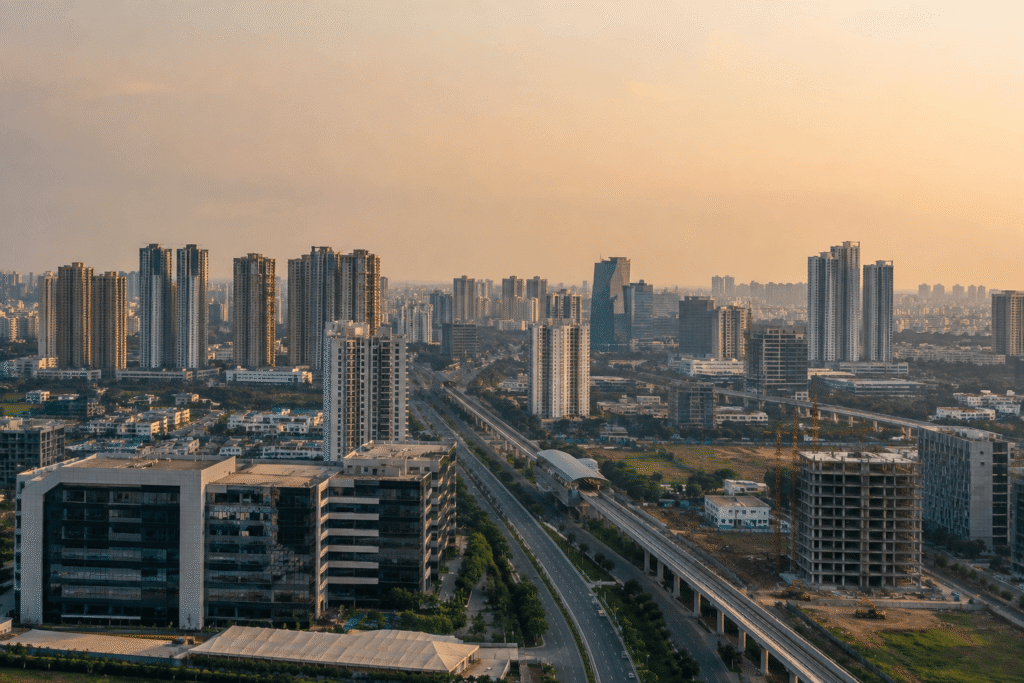
Key Takeaways The Gurgaon property market in 2026 reflects a mix of strong fundamentals, higher valuations, and selective risks across micro-markets. Every time a Gurgaon micro-market posts a headline-grabbing price jump, the same question resurfaces on investor forums and WhatsApp groups: is this growth real, or is Gurgaon just the next market waiting to correct hard? A balanced answer requires looking beyond recent price growth and examining the fundamentals supporting demand, along with the risks that could affect future performance. This analysis examines what constitutes a real estate bubble and evaluates Gurgaon against those criteria, and crucially, does not ignore the more complex aspects of the story that lend themselves to a “this is normal” narrative. Whether you’re considering purchase, hold, or wait decisions, you need the uncomfortable data points just as much as the reassuring ones. Quick Answer Gurgaon does not currently show signs of a city-wide real estate bubble in 2026. Strong employment growth, infrastructure expansion, and end-user demand continue to support the market. However, some micro-markets have experienced unusually rapid appreciation, rental yields remain modest, and buyers should evaluate individual projects rather than the city as a whole. Metric Current Status Bubble Risk Low city-wide End-user Demand Strong Rental Yield Moderate (2–3%) Infrastructure Expanding Oversupply Limited Investment Horizon 5–10 years What Actually Defines a Real Estate Bubble? A property bubble forms when prices rise significantly beyond what underlying fundamentals such as income levels, rental returns, and genuine housing demand can justify. The usual warning signs include: Most historical property bubbles from the US in 2008 to parts of China more recently showed several of these at once. The relevant question for Gurgaon isn’t whether prices have risen fast (they have), but whether that rise is backed by real demand or mostly by speculation. Does Gurgaon Show Bubble Characteristics Today? Indicator Healthy Market Bubble Market Gurgaon (2026) End-user demand High Low High Rental demand Strong Weak Strong, but yields modest Infrastructure Expanding Weak/stagnant Expanding Speculative buying Moderate Very high Moderate, higher in select sectors Supply Balanced Oversupplied Broadly balanced Price volatility Low-moderate High, sharp reversals Moderate; one correction already seen in 2025 City-wide, Gurgaon lands closer to “healthy” than “bubble” on most indicators. But two rows in that table deserve more scrutiny than a simple checkmark, so these indicators require closer examination rather than a simple conclusion. Are Gurgaon Rental Yields Good in 2026? Residential rental yields in Gurgaon are generally estimated to range between 2% and 3% across many residential segments, according to industry research published by organizations such as Knight Frank, JLL, CBRE, and ANAROCK. While these yields are relatively modest compared to the city’s long-term capital appreciation potential, and lower than those typically seen in many commercial real estate assets, they do not, by themselves, indicate a property bubble. Investors focused on rental income should assess location-specific rental demand, vacancy rates, maintenance costs, and future growth prospects before making an investment decision. Low rental yield alone doesn’t prove a bubble; it’s normal in high-appreciation markets, where investors accept lower current income in exchange for capital growth. But it does mean Gurgaon residential property isn’t currently a strong pure income play, and any analysis that leans entirely on “rental demand is strong” without mentioning the yield number is giving you half the picture. If your primary goal is rental income rather than capital appreciation, rental yield should be one of the first metrics you evaluate, along with vacancy risk, maintenance costs, and future demand. Did Gurgaon Property Prices Correct Before 2026? The idea that Gurgaon property prices only move upward does not fully reflect recent market behaviour. After significant appreciation between 2021 and 2024, some residential segments experienced price moderation during 2025 as buyers became more selective and affordability pressures increased. The correction was not uniform across Gurgaon. Established premium locations, infrastructure-led corridors, and high-demand projects showed greater resilience, while some rapidly appreciated pockets saw more noticeable price adjustments. This moderation does not indicate a market collapse. Instead, it highlights that Gurgaon has entered a more mature phase where valuations are being tested against fundamentals such as employment growth, infrastructure delivery, supply discipline, and genuine end-user demand. A market capable of absorbing slower growth or limited corrections is different from one driven purely by speculative momentum. Why Have Gurgaon Property Prices Increased? The rise in prices over the past five years can be attributed to several real (rather than speculative) factors. Infrastructure Expansion The connectivity upgrade has significantly altered the commutable area of Gurgaon and consequently, also the demand for it, which is the fastest among all factors. Key developments include: Employment Growth Gurgaon remains one of India’s leading corporate hubs, with offices of multinational companies, technology firms, consulting firms, financial institutions, and Global Capability Centres. This results in a continuous, real demand for housing by professionals relocating for employment, as opposed to speculative buyers, who look to resell the home within months. Limited Premium Supply In general, developers have introduced premium inventory piecemeal, rather than introducing the market on a large scale, which has limited supply in key luxury corridors and allowed for a real, although limited, increase in prices. Rising Construction Costs Material inflation, labour costs, and higher construction and compliance standards have pushed up development costs industry-wide, which shows up directly in new-launch pricing. Some of today’s higher prices simply reflect what it costs to build now, not speculative markup. Which Gurgaon Areas Offer the Best Long-Term Investment Potential? Not every part of Gurgaon tells the same story, and lumping them together is where a lot of bubble commentary goes wrong. Corridors with strong appreciation backed by fundamentals: Gurgaon Real Estate Outlook by Corridor (2026) Corridor Market View Key Driver Dwarka Expressway Growth corridor Connectivity + new development SPR High-growth zone Commercial expansion Golf Course Extension Road Premium established market Luxury demand New Gurgaon Value growth corridor Affordability + infrastructure Golf Course Road Mature premium market Corporate demand Pockets worth more caution: Some Gurgaon micro-markets have significantly outperformed the city average due
Ready-to-Move vs Under-Construction Property: Which is Better in 2026?
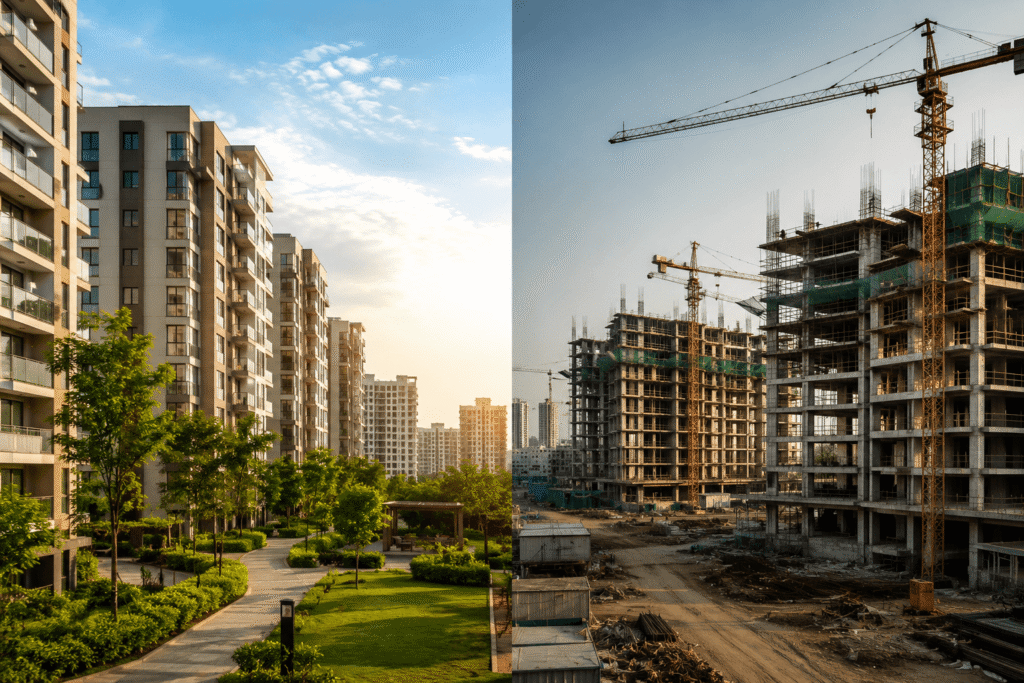
Ready-to-Move vs Under-Construction Property is one of the biggest decisions homebuyers and investors face before purchasing real estate. Buying a property is a significant financial commitment, and choosing between a ready-to-move home and an under-construction project depends on your budget, investment goals, timeline, and risk tolerance. This guide compares both options, including their advantages, disadvantages, costs, risks, and investment potential, to help you make an informed decision with confidence. Ready-to-Move vs Under-Construction: Which is Better? Ready-to-move properties are generally the better choice for buyers who need immediate possession, lower investment risk, and the ability to start earning rental income right away. In contrast, under-construction properties are often preferred by long-term investors because they typically offer lower entry prices and greater potential for capital appreciation. Ultimately, the right choice depends on your budget, financial goals, investment timeline, and risk tolerance. Over the past few years, India’s real estate market has been more transparent with the introduction of RERA, better financing options, and tighter regulations. As a result, buyers can now find more reliable information to help them compare projects before they invest. This comprehensive guide will help you understand the distinction between ready-to-move and under-construction properties and enable you to make an informed decision aligning with your needs. What is a Ready-to-Move Property? A ready-to-move property is a completed residential or commercial property that has received the required occupancy approvals and is ready for immediate possession. A Move-in Ready property is a finished home or office space that has received final occupancy approvals from the local jurisdiction. Buyers have the advantage of physically examining the property, finalising the transaction, and moving in soon after registration. Unlike under-construction projects, ready-to-move-in properties give buyers a clear view of what they are buying. With construction quality and amenities, you can see everything before you invest. Key Features of Ready-to-Move Properties Purchasing a ready-to-move-in property gives assurance, as there are no assumptions about the design, quality of construction, or completion schedules of the project Advantages of Buying a Ready-to-Move Property Why Buyers Prefer Ready Homes 1. Immediate Possession One of the biggest benefits is instant ownership. Buyers who need accommodation immediately do not have to wait for years before moving into their new home. This makes ready homes ideal for: 2. No Construction Delay Risk Construction delays have historically affected many projects across different cities. Although RERA has improved accountability, delays can still occur because of labor shortages, regulatory approvals, material costs, or unforeseen circumstances. A ready property eliminates this uncertainty. 3. What You See is What You Buy When buying A finished product, buyers can check on: Apartment size, Room dimensions, quality of construction, daylight ventilation, view from the balcony, common areas, parking, utilities, clubhouse, alarm systems. This visibility greatly minimizes the risk of buying. 4. Immediate Rental Income A ready-to-move-in property allows the investors to generate rental income right away. There is no need to wait years for the project to be completed, as rental returns will start immediately upon possession, thus enhancing cash flow and lowering the overall cost of holding. 5. Established Social Infrastructure Most of the ready projects are located in developed areas that have: Schools Hospitals Shopping Malls. Metro connectivities Restaurants Banks Parks Public Transport This is more suitable for homes with a family or working adults. 6. Streamlined Home Loan Assessment In general, banks feel more comfortable lending on a finished home, as the risk of construction has been removed. Loan approval may also be quicker because the property already exists Disadvantages of Ready-to-Move Properties While ready-to-move properties offer many advantages, they also come with a few limitations that buyers should consider before making a decision. Higher Purchase Price Ready possession houses tend to be more expensive than those still under construction in the same area. The premium reflects: Popular developments are usually sold out after completion of construction. However, buyers have limited options in terms of: Who Should Buy Ready-to-Move? Best For Not Ideal For What is an Under-Construction Property? An under-construction property is a project that is still being built and will be delivered to buyers on a future possession date. An under-construction property is a residential or commercial project in its development phase, and final possession has not been granted yet. Buyers buy these units at various stages of building, from the first launch to near completion. Developers usually release many payment plans linked to construction stages and provide the flexibility to the buyers to make payments over time. Advantages of Buying an Under-Construction Property According to multiple Indian real estate market reports, under-construction projects in high-growth micro-markets have historically delivered around 15–30% price appreciation between launch and possession. However, actual returns vary based on the developer’s reputation, infrastructure development, market conditions, and project location. Property values have a tendency to rise as the building is built and surrounding infrastructure is established. Contributors to appreciation are: This slow appreciation is often to the advantage of long-term investors as well. 1. Flexible Payment Plans A few developers also provide enticing payment plans like: This allows buyers to better plan their finances. 2. Wider Choice Early-bird buyers get to enjoy a wider selection of:- These choices might not be existent any more when the project is finished. 3. Modern Design and Amenities Newly started housing estate developments are increasingly incorporating: These are the features that today’s home buyers are looking for when shopping for future-ready homes. 4. Customization Opportunities Depending on the stage of construction, the developer allows the buyer to make the following customizations: Such personalization may not be possible in finished properties. Disadvantages of Under-Construction Properties 1. Delays in possession of property Some of the possible causes are: Although RERA offers legal protection, buyers need to assess the developer’s history of delivery in the past before they invest. 2. Market Risk Economic conditions can influence property values during construction. Factors include: Investors should consider long-term market fundamentals instead of short-term price movements. 3. Construction Quality Uncertainty Since the project is incomplete, buyers cannot inspect the finished apartment. Instead, they rely on: Choosing a reputable developer significantly reduces