Is Gurgaon Real Estate in a Bubble? Expert Market Analysis (2026)
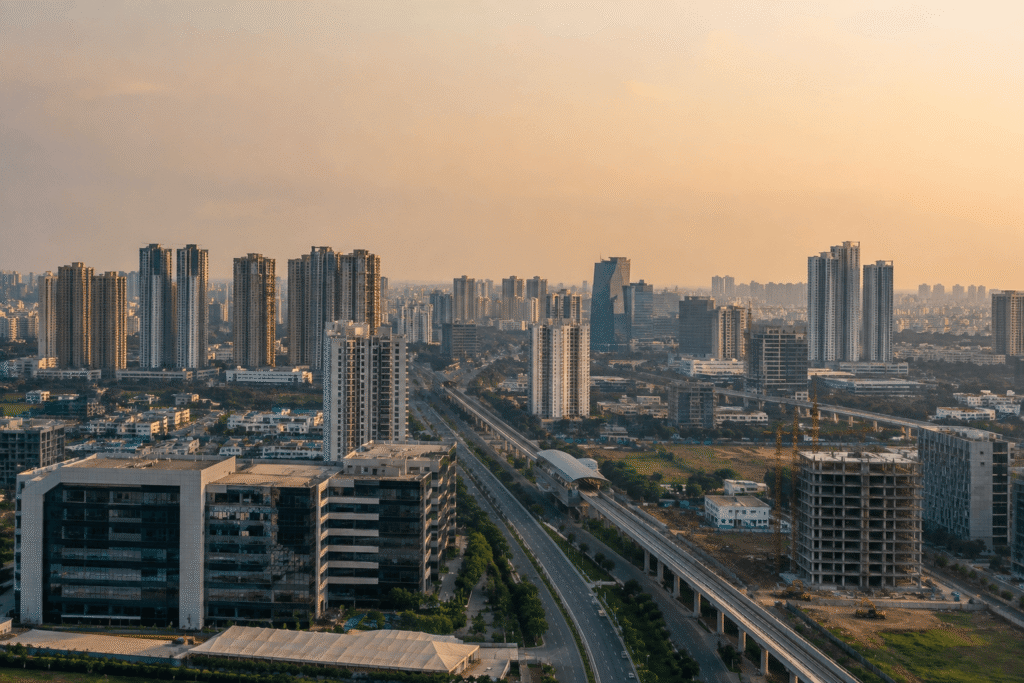
Key Takeaways The Gurgaon property market in 2026 reflects a mix of strong fundamentals, higher valuations, and selective risks across micro-markets. Every time a Gurgaon micro-market posts a headline-grabbing price jump, the same question resurfaces on investor forums and WhatsApp groups: is this growth real, or is Gurgaon just the next market waiting to correct hard? A balanced answer requires looking beyond recent price growth and examining the fundamentals supporting demand, along with the risks that could affect future performance. This analysis examines what constitutes a real estate bubble and evaluates Gurgaon against those criteria, and crucially, does not ignore the more complex aspects of the story that lend themselves to a “this is normal” narrative. Whether you’re considering purchase, hold, or wait decisions, you need the uncomfortable data points just as much as the reassuring ones. Quick Answer Gurgaon does not currently show signs of a city-wide real estate bubble in 2026. Strong employment growth, infrastructure expansion, and end-user demand continue to support the market. However, some micro-markets have experienced unusually rapid appreciation, rental yields remain modest, and buyers should evaluate individual projects rather than the city as a whole. Metric Current Status Bubble Risk Low city-wide End-user Demand Strong Rental Yield Moderate (2–3%) Infrastructure Expanding Oversupply Limited Investment Horizon 5–10 years What Actually Defines a Real Estate Bubble? A property bubble forms when prices rise significantly beyond what underlying fundamentals such as income levels, rental returns, and genuine housing demand can justify. The usual warning signs include: Most historical property bubbles from the US in 2008 to parts of China more recently showed several of these at once. The relevant question for Gurgaon isn’t whether prices have risen fast (they have), but whether that rise is backed by real demand or mostly by speculation. Does Gurgaon Show Bubble Characteristics Today? Indicator Healthy Market Bubble Market Gurgaon (2026) End-user demand High Low High Rental demand Strong Weak Strong, but yields modest Infrastructure Expanding Weak/stagnant Expanding Speculative buying Moderate Very high Moderate, higher in select sectors Supply Balanced Oversupplied Broadly balanced Price volatility Low-moderate High, sharp reversals Moderate; one correction already seen in 2025 City-wide, Gurgaon lands closer to “healthy” than “bubble” on most indicators. But two rows in that table deserve more scrutiny than a simple checkmark, so these indicators require closer examination rather than a simple conclusion. Are Gurgaon Rental Yields Good in 2026? Residential rental yields in Gurgaon are generally estimated to range between 2% and 3% across many residential segments, according to industry research published by organizations such as Knight Frank, JLL, CBRE, and ANAROCK. While these yields are relatively modest compared to the city’s long-term capital appreciation potential, and lower than those typically seen in many commercial real estate assets, they do not, by themselves, indicate a property bubble. Investors focused on rental income should assess location-specific rental demand, vacancy rates, maintenance costs, and future growth prospects before making an investment decision. Low rental yield alone doesn’t prove a bubble; it’s normal in high-appreciation markets, where investors accept lower current income in exchange for capital growth. But it does mean Gurgaon residential property isn’t currently a strong pure income play, and any analysis that leans entirely on “rental demand is strong” without mentioning the yield number is giving you half the picture. If your primary goal is rental income rather than capital appreciation, rental yield should be one of the first metrics you evaluate, along with vacancy risk, maintenance costs, and future demand. Did Gurgaon Property Prices Correct Before 2026? The idea that Gurgaon property prices only move upward does not fully reflect recent market behaviour. After significant appreciation between 2021 and 2024, some residential segments experienced price moderation during 2025 as buyers became more selective and affordability pressures increased. The correction was not uniform across Gurgaon. Established premium locations, infrastructure-led corridors, and high-demand projects showed greater resilience, while some rapidly appreciated pockets saw more noticeable price adjustments. This moderation does not indicate a market collapse. Instead, it highlights that Gurgaon has entered a more mature phase where valuations are being tested against fundamentals such as employment growth, infrastructure delivery, supply discipline, and genuine end-user demand. A market capable of absorbing slower growth or limited corrections is different from one driven purely by speculative momentum. Why Have Gurgaon Property Prices Increased? The rise in prices over the past five years can be attributed to several real (rather than speculative) factors. Infrastructure Expansion The connectivity upgrade has significantly altered the commutable area of Gurgaon and consequently, also the demand for it, which is the fastest among all factors. Key developments include: Employment Growth Gurgaon remains one of India’s leading corporate hubs, with offices of multinational companies, technology firms, consulting firms, financial institutions, and Global Capability Centres. This results in a continuous, real demand for housing by professionals relocating for employment, as opposed to speculative buyers, who look to resell the home within months. Limited Premium Supply In general, developers have introduced premium inventory piecemeal, rather than introducing the market on a large scale, which has limited supply in key luxury corridors and allowed for a real, although limited, increase in prices. Rising Construction Costs Material inflation, labour costs, and higher construction and compliance standards have pushed up development costs industry-wide, which shows up directly in new-launch pricing. Some of today’s higher prices simply reflect what it costs to build now, not speculative markup. Which Gurgaon Areas Offer the Best Long-Term Investment Potential? Not every part of Gurgaon tells the same story, and lumping them together is where a lot of bubble commentary goes wrong. Corridors with strong appreciation backed by fundamentals: Gurgaon Real Estate Outlook by Corridor (2026) Corridor Market View Key Driver Dwarka Expressway Growth corridor Connectivity + new development SPR High-growth zone Commercial expansion Golf Course Extension Road Premium established market Luxury demand New Gurgaon Value growth corridor Affordability + infrastructure Golf Course Road Mature premium market Corporate demand Pockets worth more caution: Some Gurgaon micro-markets have significantly outperformed the city average due
Gurgaon Property Price Trends 2026: Sector-Wise Analysis

Updated 2 November 2026 Quick answer: Gurgaon property price trends in 2026 point to a market that has stopped rising evenly. Golf Course Road asking prices were up 10.24% in a year to ₹23,550 per sq ft, while Dwarka Expressway (−2.95%) and Southern Peripheral Road (−5.46%) slipped, according to Square Yards listing data for September 2026. Knight Frank puts Gurugram’s average price rise for January to September 2026 at 4%, the lowest in NCR. Collector rates went up on 1 April 2026 by about 62–67% for plots in Dwarka Expressway sectors 104 to 115. Key takeaways on Gurgaon property price trends What do Gurgaon property price trends in 2026 show? The three big data sources behind Gurgaon property price trends measure different things, which is why their figures don’t match. Read them side by side rather than picking one. Source What it measures Period Figure Square Yards Asking price on resale and new listings in Gurgaon Sep 2026 ₹12,200 to ₹23,550 per sq ft by corridor Anarock Basic selling price across all of NCR Q3 2026 ₹9,980 per sq ft, +12% YoY, +2% QoQ Knight Frank Weighted average price in Gurugram Jan–Sep 2026 +4%, lowest rise in NCR Anarock’s NCR figure includes Noida, Ghaziabad and Faridabad, where homes cost less, so its average sits well below Gurgaon’s corridor rates. Knight Frank and Square Yards both look at Gurugram alone, and both show Gurgaon property price trends slowing compared with 2024 and 2025. Supply explains part of the slowdown in the Gurgaon real estate market. Anarock counts 86,200 unsold homes across NCR, an 18-month overhang, and Knight Frank says Gurugram accounts for 57% of NCR’s unsold stock. New launches are moving towards Sohna and Dwarka Expressway, so those corridors have the most homes competing for buyers. Gurgaon property price trends by corridor: property rates in Gurgaon (September 2026) Corridor Avg asking price (₹/sq ft) Change in 1 year Avg rent (₹/sq ft/month) Rental yield Golf Course Road 23,550 +10.24% 47 2.39% Golf Course Extension Road 19,300 +0.43% 38 2.36% Sohna Road 17,250 +1.63% 31 2.16% Southern Peripheral Road (SPR) 14,750 −5.46% 32 2.60% Dwarka Expressway 13,600 −2.95% 27 2.38% New Gurgaon 12,200 +1.34% 24 2.36% Source: Square Yards property rates in Gurgaon, September 2026 data, accessed 2 November 2026. These are asking prices on listings, not registered sale prices. Final deals usually close below the asking figure, more so in corridors with heavy supply. To see what these property prices in Gurgaon suggest in cash, take a 1,500 sq ft three-bedroom flat. At those averages, it costs approximately ₹1.83 crore in New Gurgaon, ₹2.04 crore on Dwarka Expressway, ₹2.90 crore on Golf Course Extension Road, and ₹3.53 crore on Golf Course Road. Want current asking prices for a specific sector or society? Call a KMA adviser on +91-9056560022. Golf Course Road: why is it still rising? Golf Course Road went up 10.24% in a year to ₹23,550 per sq ft, the only double-digit rise in Gurgaon property price trends for 2026. Very little new land is available here, and most stock is older luxury towers and a few new launches, so supply barely grows. The rent of ₹47 per sq ft a month is the highest in the city, but the 2.39% yield shows that buyers pay mostly for location, not rental income. Our comparison of Golf Course Road and Golf Course Extension Road covers the trade-offs in detail. Golf Course Extension Road: flat after a strong run Golf Course Extension Road has the flattest of the Gurgaon property price trends in 2026: ₹19,300 per sq ft in September, up just 0.43% in a year. It has 5,242 active listings on Square Yards, against 946 on Golf Course Road, so buyers have far more choice. That volume is the main reason Gurgaon flat prices on this road have paused. Dwarka Expressway property prices: more supply, softer asking rates Dwarka Expressway property prices averaged ₹13,600 per sq ft in September 2026, 2.95% below the same month in 2025. With 8,610 listings, it has more houses on offer than some other corridors in the table, and Knight Frank names it as one of the areas where new delivery is heading. Sector 106 is the exception on Square Yards’ list, at ₹16,450 per sq. ft., as it has several more modern top-rate launches. The corridor’s collector rate also jumped. For group housing flats in sectors 104 to 115, it went from about ₹4,200 to about ₹7,000 per sq ft, which is still roughly half the asking price. Our guide to Dwarka Expressway property prices goes sector by sector. New Gurgaon: the lowest entry price New Gurgaon averaged ₹12,200 per sq ft, up 1.34% in a year, and has the lowest rent of the six corridors at ₹24 per sq ft a month. A 1,500 sq ft flat here costs about ₹21 lakh less than the same size on Dwarka Expressway, and there are 6,547 listings to choose from. Southern Peripheral Road: the biggest drop SPR averaged ₹14,750 per sq ft, down 5.46% in a year, the largest fall in Gurgaon property price trends this year. It also has the highest rental yield at 2.60%, because rents held up better than asking prices. For buyers, this is the corridor where negotiating hardest makes the most sense right now. Circle rate Gurgaon 2026-27: what changed on 1 April Gurugram’s new collector rates took effect on 1 April 2026, and Dwarka Expressway saw the steepest increase. Area Before 1 April 2026 Collector rate 2026-27 Sectors 104–115, residential plots about ₹40,000–44,000 per sq yd ₹66,125–70,000 per sq yd Sectors 104–115, group housing flats about ₹4,200 per sq ft about ₹7,000 per sq ft Golf Course Road, sectors 42, 43 and 54 not reported up about 10–20% Source: The Tribune, 29 March 2026. Stamp duty is charged on the deal value or the collector rate, whichever is higher. For new flats on Dwarka Expressway, the asking price of ₹13,600 per sq ft is still far above the new